STUDY AND DESIGN FOR LUBRICATION OIL WASTE MANAGEMENT IN NIGERIA – A CASE STUDY OF SOUTH-SOUTH ZONE, NIGERIA (EDO STATE) (COMPLETED)
Home
Project Details
BRIEF INTRODUCTION
Anthropogenic activities have led to environmental degradation and pollution which is a perennial problem that challenges the development efforts of all tiers of government in Nigeria. Environmental pollution especially from pollutants originating from petroleum hydrocarbons has been a serious challenge to development in Nigeria. Petroleum hydrocarbon pollution arising from indiscriminate and deliberate disposal of waste lubricating oil (e.g. Engine oil) in the environment has become worrisome (Obinia and Afiukwaa, 2013).
Lubricants typically comprise 90% base oil (mostly petroleum fractions, also known as mineral oils) and fewer than 10% additives. Poor management and careless disposal of used lube oil can affect the environment negatively (Lam et al., 2016). Lubricating oil, sometimes simply called lubricant/lube, is a class of oils used to reduce the friction, heat, and wear between mechanical components that are in contact with each other. Lubricating oil is used in motorized vehicles, where it is known specifically as motor oil and transmission fluid.
Aim of research: To assess PAHs, heavy metals and other possible pollutants in the soil and groundwater samples collected in any designated locations of automobile mechanic villages within Benin metropolis.
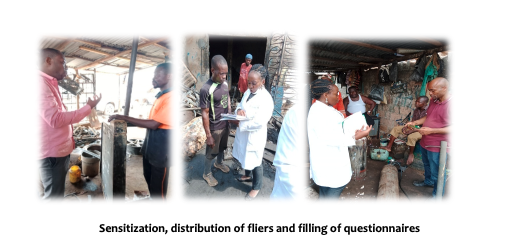
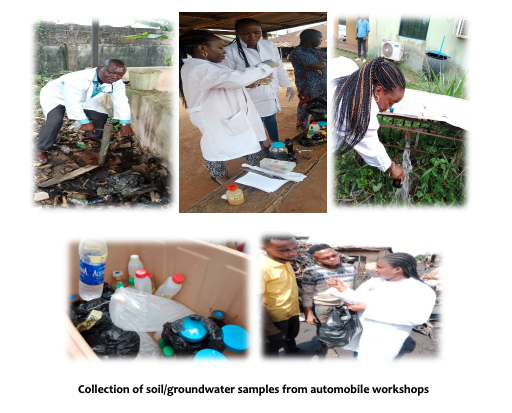
Methodology:
Conclusion: Results from the Laboratory analysis, data analytical tools and statistical tools, revealed a high level of physicochemical properties and heavy metal content in soil and groundwater samples depleting the nutrients of the soil and making the borehole unsafe for consumption.