DETERMINATION OF THE POTENTIAL OF MUNICIPAL SOLID WASTE AS A FEEDSTOCK FOR THE COMMERCIAL PRODUCTION OF BIOETHANOL IN BENIN METROPOLIS (EDO STATE), SOUTH-SOUTH ZONE, NIGERIA (COMPLETED)
Home
Project Details
BRIEF INTRODUCTION:
The increase in energy demand and the progressive depletion of oil reserves and the degradation of the environment have motivated the search for alternative renewable energy resources BIOFUELS; one such fuel is BIOETHANOL. There has been growing interest worldwide to find new and cheap carbohydrate sources for the fermentation and resulting production of ethanol, this is because the conventional crops used in large-scale ethanol production e.g. sugar cane, corn, wheat, and rice are unable to meet the global demand for ethanol due to their primary value as food and feed (Pimental, 2008).
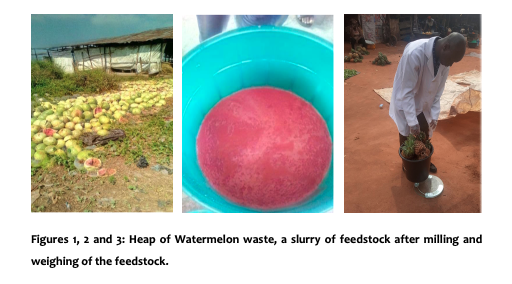
Hence much research has gone into the use of agricultural waste (watermelon and pineapple waste) and other biomasses which do not compete with food and feed as sources of carbohydrate to be fermented for ethanol production.
Aim of this research
To ascertain the potential of Municipal Solid Waste (MSW) as a feedstock for commercial production of bioethanol
Objectives of the research
Characterization of waste generated in the study area.
Ascertain the current MSWM system in the study area
Determine the feasibility of SMSWM as an efficient vehicle for feedstock collection and transportation.
Ascertain if the waste generated has commercial viability as feedstock for bioethanol production.
To identify problems in the waste management system and proffer sustainable solutions.
Conclusion
The alcoholic content of the end product of the watermelon waste and pineapple waste was 76.4% and 74.8%. This therefore implies that watermelon waste is a feasible raw material for ethanol production and if exploited will complement the energy needs of man and bring about a sustainable environment.