DESIGN AND DEVELOPMENT OF BIOETHANOL PLANT WITH FRACTIONAL DISTILLATION UNIT(COMPLETED)
Home
Project Details
INTRODUCTION
Nigeria is endowed with abundant supply of oil, natural gas and coal. It is estimated to have proven reserve of approximately 35 billion barrels of oil, about 2.7 billion tonnes of coal and 187 trillion barrels’ standard cubic feet of natural gas according to the Draft National Energy Master Plan, 2007. Thus Oil and gas related operations are the most obvious industrial activities in the country. Oil and gas resources account for over 95% of the country’s export earnings and 82% of the government’s total revenue (Wikipedia, 2006). However, the continuous exploitation of these fossil fuels does not occur without adverse impact on the environment. Gas flaring and oil spillage during exploration, transportation, usage and vandalization have resulted to land degradation, aquatic and air pollution respectively.
It is however worthy of note that all petroleum-based fuels can be replaced by renewable biomass fuels such as bioethanol, bio-diesel derived from agricultural raw materials. Countries across the globe have considered and directed state policies towards the increased and economic utilization of biomass for meeting their future energy demands to meet carbon dioxide reduction targets as well as to decrease reliance and dependence on the supply of fossil fuels. Although biomass can be a huge source of transport fuels such as bioethanol, biomass is commonly used to generate both power and heat, generally through combustion. Ethanol is at present the most widely used liquid biofuel for motor vehicles (Demirbas, 2005). The importance of ethanol is increasing due to several reasons such as global warming and climate change as a result of the exploration and utilization of fossil fuel which is not environmentally friendly. (Sarkar et al., 2012). Bioethanol has been receiving widespread interest at the international, national and regional levels. The global bioethanol market has entered a phase of rapid, transitional growth. Many countries around the world are shifting their focus toward renewable sources for power production because of depleting crude oil reserves. Ethanol has potential as a valuable replacement of premium motor spirit (PMS) in the transport fuel market.
AIM
The aim of this project is to Design and Develop an indigenous Pilot Scale Bioethanol Plant.
The objectives of this study are:
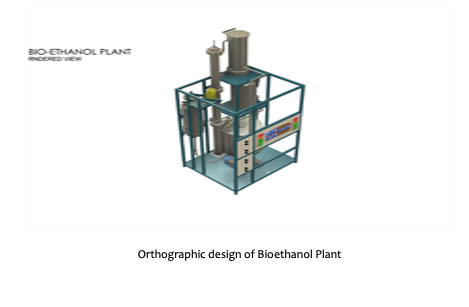
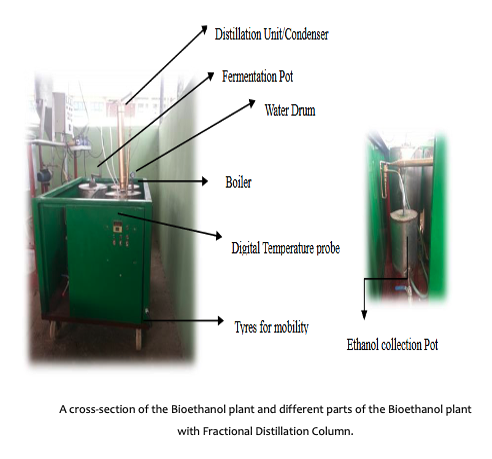
Comprehensive/Detailed engineering design of a mobile bio-ethanol plant with a fractional distillation unit.
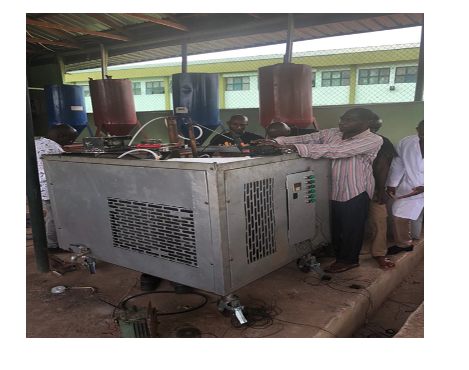
Sourcing of Indigenous materials/personnel for the fabrication of the bioethanol plant with fractional distillation unit (to meet 90% local content).
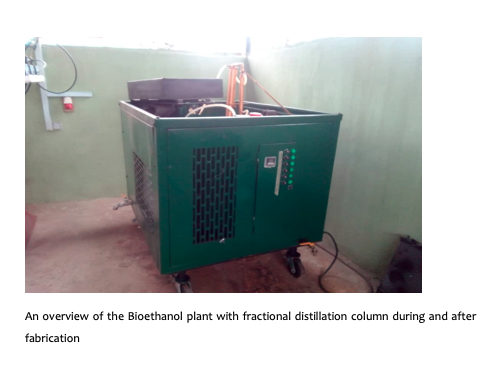
To fabricate a mobile/user-friendly bioethanol plant.
To fabricate an energy-efficient bioethanol plant to produce 85% yield of ethanol.
Waste to Energy Advocacy: To employ/deploy the bioethanol plant for the production of bioethanol from agricultural waste materials to meet the energy demand of rural/urban dwellers.