
BRIEF INTRODUCTION:
Anthropogenic activities create waste, and the way these wastes are handled, stored, collected and disposed that pose risks to the environment and to public health. In urban areas, especially in the rapid urbanizing cities of the developing nations like Nigeria, problems and issues of Solid Waste Management (SWM) are of immediate importance. This has been acknowledged by most governments, however rapid population growth overwhelms the capacity of most municipal authorities to provide even the most basic services. Typically, one to two thirds of the solid waste generated is not collected. As a result, the uncollected waste, which is often also mixed with human and animal excreta, is dumped indiscriminately in the streets and in drains, thereby contributing to flooding, breeding of insect and rodent, vectors and the spread of diseases. Furthermore, even collected waste is often disposed in uncontrolled dumpsites and/or burnt, polluting water resources and air. Globally, population growth, together with economic growth and associated consumption behaviour, has resulted in a significant increase in solid waste production (UNEP, 2009). Wastes are of various types namely; industrial/hazardous waste, biomedical/hospital waste and household/municipal waste.
Solid waste management in Nigeria is marred with indiscriminate dumping, inadequate landfill sites and improper waste collection and transportation system, hence it is safe to say that Nigeria suffers from a poor waste management policy and the first step in solving this problem is planning a sustainable waste management system and the characterization of generated waste (Wale, 2019).
It is against this background that the National Centre for Energy and Environment is embarking on the characterization of waste as feedstock for the commercial production of Bioenergy in Benin Metropolis, South-South zone, Nigeria. The University of Benin campus has been recommended as a perfect model of an ideal society for carrying out this project.
AIM
To determine the potentials of using municipal solid waste as a feedstock in the commercial production of Bioethanol.
OBJECTIVES
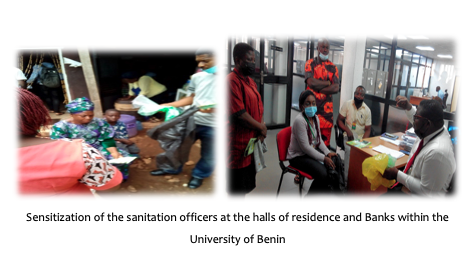
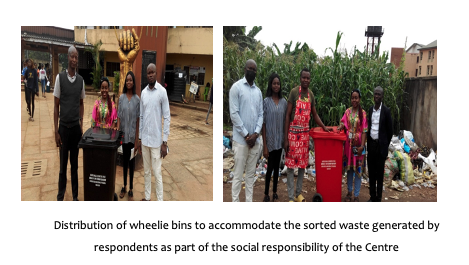
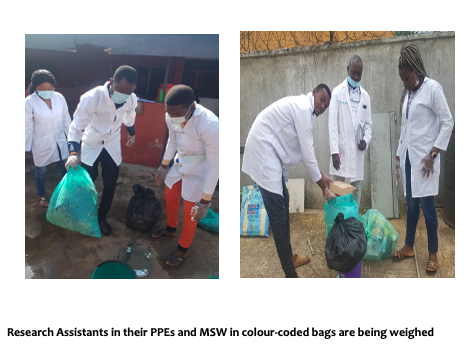
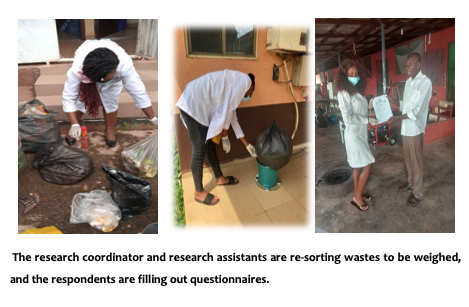
FINDINGS/CONCLUSION
The largest proportion of waste in the residential areas of the University of Benin metropolis can be composted rather than disposed of. The solid waste generated is made of nine major components (fruit, food, plastic, paper, glass, metals, combustibles, leaves, and ceramics). The study showed that 58.85% of the total solid waste generated in the residential areas of the University of Benin community was made of biodegradable matter which can be harnessed for the production of Bioethanol using the locally fabricated Bioethanol Plant with Fractional distillation column of the National Centre for
Energy and Environment. The recyclables (Papers and Plastics) which are 36.34 % of the waste can also be recycled into other useful products. Efforts should be made by stakeholders to evolve sustainable waste management policies for disposal, waste reduction and recycling projects. The Edo State Waste Management Board (EWMB) should encourage community participation and involvement in waste management. Also, formal composting and recycling facilities should be set up in the University community and Edo State at large.