DESIGN AND DEVELOPMENT OF A FILE SANITIZER DEVICE (COMPLETED)
Home
Project Details
BRIEF INTRODUCTION:
In early December 2019, a deadly viral disease broke out in Wuhan city, Hubei Province, China. The disease named COVID-19 was caused by a severe acute respiratory syndrome virus SARS-COV 2 popularly called the “CORONA” virus or Covid 19. The disease spread rapidly all over the world, infecting millions of people and killing thousands in the first few months of its outbreak. (John Hopkins Corona Virus Resource Centre, 2020). The COVID-19 pandemic changed the way we live, our beliefs, culture and indeed lifestyle as we can attest to the fact. Only essential workers for example Doctors, Firemen and security personnel were allowed to go to work and they had to observe strict COVID-19 protocols.
The Nigerian story wasn’t different, the government sort ways to get its citizens back to work and normalcy, it acquired and distributed vaccines free to persons who were willing to be vaccinated. It was compulsory to have a wash hand station at the entrance of every public building and the fumigation of public buildings was done regularly as one of the ways to curb the spread of the virus. It is against this background that the Environmental Pollution and Remediation Unit of the National Centre for Energy and Environment came up with the design and development of a file sanitiser as one of the remedial measures to curb the spread of the virus in public offices.
AIM
To design and develop a file sanitizing system which will be utilized for disinfecting our files/documents in public offices thereby reducing the spread of Covid-19 in our working environment.
OBJECTIVES
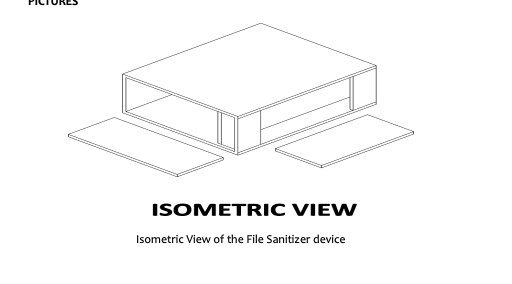
Engineering design of an eco-friendly file sanitizer system
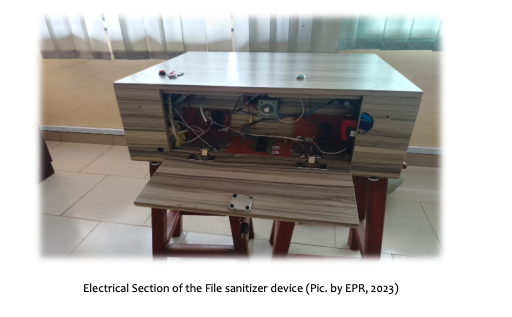
Fabrication of an indigenous eco-friendly file sanitizer machine which will be used to disinfect books/paper documents using locally sourced materials.
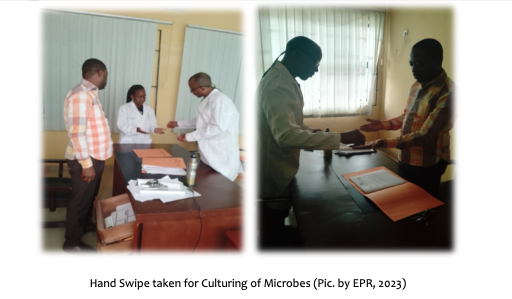
Testing of the file sanitizer system to ascertain if an infested document was disinfected.
Recommendation of the file sanitizing device to be utilized in public offices as a way of curbing the spread of the virus.
FINDINGS/CONCLUSION
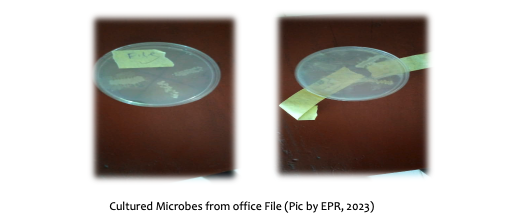
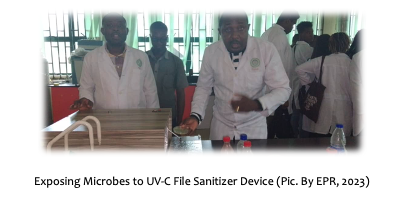
The file sanitizer device represents a breakthrough solution for preventing the spread of harmful micro-organisms thereby reducing the probability of infections and health complications arising from contaminated paper files. Various micro-organisms cultivated for up to three hours on plates and exposed for about 5 minutes were successfully eradicated in a controlled environment. This is evident in the first few experiments carried out. It extended the evaluation by examining the response of plates that had undergone a longer incubation period of micro-organisms for up to 6 hours. The bacteriostatic effects observed for plates exposed to UV-C light for 1 to 4 minutes demonstrated the device’s consistent ability to restrain microbial growth. Notably, the bactericidal effects observed for a 5-minute exposure duration reaffirm the file sanitizer device’s proficiency in eliminating micro-organisms that may have proliferated on office files over extended periods. Thus utilizing UV-C light technology in the design of the file sanitizer is without a doubt an innovative solution that can effectively combat the potential health risks associated with shared paper files.
It is important to note that safety was the top priority when designing the sanitizer to ensure that human contact with the UV-C light was avoided. The design, development and testing procedures thus provide compelling evidence regarding the device’s ability to overcome the challenges associated with microbial contamination in paper files depending on the exposure duration. By incorporating this innovative solution, various industries, offices and institutions can ensure the well-being and occupational health and safety of individuals who regularly interact with paper documents, minimizing the risk of cross-contamination and associated health concerns. The exposure duration can also be refined with further investigations with regards to specific types of micro-organisms commonly found on office files.