2022 CAPITAL PROJECT: PROFILING AND TOXICOLOGICAL ASSESSMENT OF DIGESTATE FROM NCEE BIOGAS DOME:
Home
Project Details
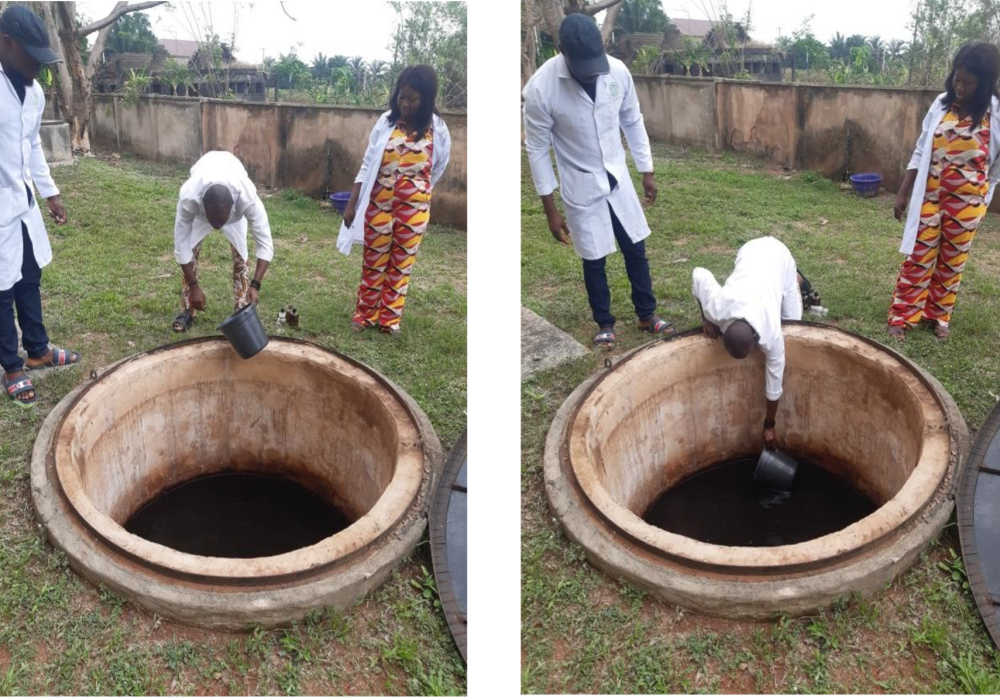
Collection of digistate from NCEE biogas fixed dome by Technical team of NCEE
AIM AND OBJECTIVES
The aim of the project is to carry out ecotoxicological profiling, digestate characterization, physico-chemical and microbial profiling of digestate from the biogas fixed dome of the
National Centre for Energy and Environment, for agricultural purposes.
To achieve this aim, the specific objectives of the project will include;
To determine the physic-chemical properties of the digestate
To fully characterize liquid fraction of digestates obtained
To identify and characterize the microbial communities present in the digestate
To conduct toxicity tests with Allium cepa,Aporrectodea longa, and Clarias gariepinus
PROJECT OUTCOME
The study was carried out to determine the suitability of liquid digestate from a pilot biogas plant of the National Centre for Energy and Environment (NCEE) University of Benin, for land application. Digestate from the anaerobic digestion of cattle rumen was characterized, specifically for heavy metal content, presence of microbacteria, nutrient profile and rhizobacterial potentials. All replicate samples of the digestate contained the metals Mn, Cu, Zn, Pb, Cd, Cr, Fe, and Ni which ranged from 12.60-16.00, 30.00-38.00, 50.00-65.00, 0.20-0.60, 0.00, 0.60-0.86, 177.00-194.00, and 1.20 -1.80 mg/kg, respectively. However, their concentrations were lower than the specified standard limits. Total phosphorus and total nitrogen concentrations were very high and ranges from 1032 to 1409 mg/kg, and 960.06-3237.62 respectively. The presence of heavy metals in the biogas digestate may have been influenced by the grasses that were regularly consumed along with various essential elements to promote optimal nutrient supply and optimum growth rates. The bacterial isolates in the processed digestates were identified to be Bacillus subtilis, Enterobacter aerogenes, Klebsiella spp., Salmonella enterica, Escherichia coli and Clostridium difficle. The isolates in the processed digestates were further assessed for their rhizobacterial potentials and intriguingly. The study found that they could have beneficial effects on plants in that they could fix atmospheric nitrogen, solubilize and produce ammonia and Bacillus subtilis was also discovered to produce the plant growth hormone.