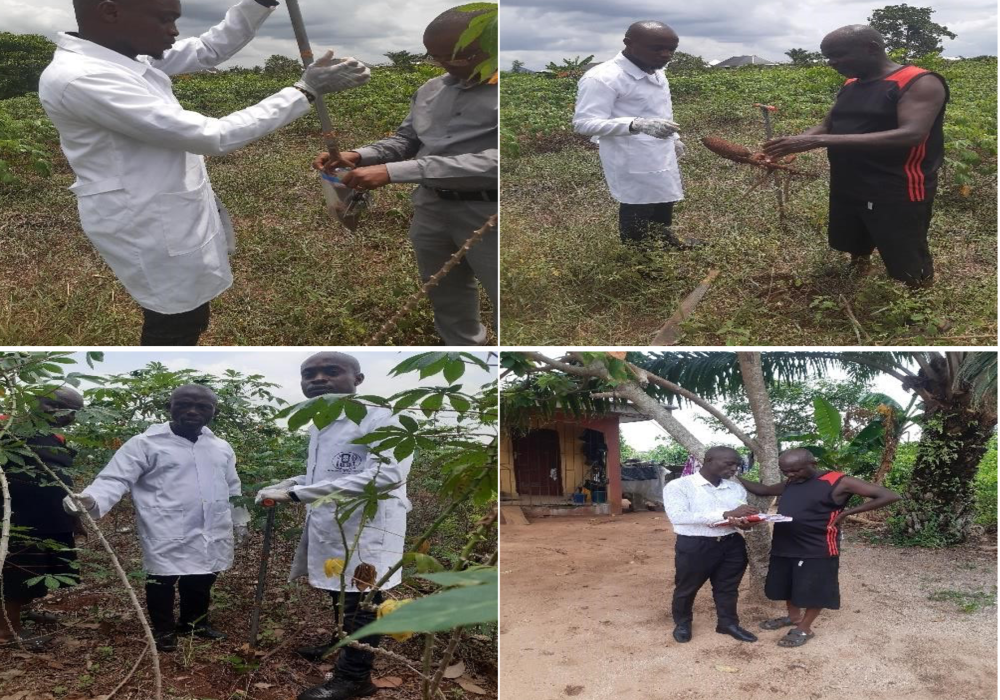
The project aims to examine pesticides usage and perception/knowledge of health and environmental risks associated with usage by farmers in Nigeria, using Edo State a pilot state in our study as well as monitoring their residues in food crops fresh from the farm and in storage facilities.
The analysis of pesticide residues in soil samples showed the presence of various pesticides, including 1,3-dimethyl-2-Nitrobenzene, Fenitrothion, Pirimiphos Ethyl, and Phosalone, at varying concentrations across different sampling stations. Similarly, analysis of cassava tuber samples revealed the presence of these pesticides, indicating localized usage or contamination patterns. The report also presents a comparison of pesticide concentrations in soil and cassava tubers, as well as Principal Component Analysis (PCA) and Factor Analysis to understand the distribution and relationships among the detected pesticides.
The findings of this comprehensive study provide valuable insights into pesticide usage, exposure, and residue patterns in the Obiaruku region, and can inform the development of policies and practices to promote sustainable agriculture and protect human health and the environment.